
About

What are kelp forests?
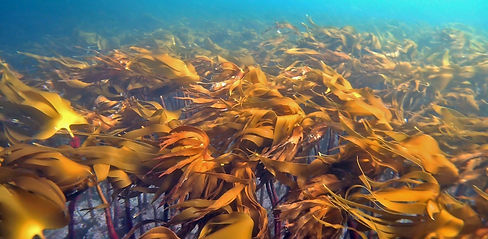
Kelp forests are some of the most diverse and productive marine ecosystems on Earth. They are formed by large brown seaweeds that create complex, three-dimensional, underwater habitats.
Kelp forests are found along approximately 25% of the world’s coastlines in predominantly temperate and subpolar regions, typically down to 15-25 m depth. Kelp forests are also prominent in some polar and tropical regions.
Kelp forests host diverse understory assemblages of other red, green and brown seaweeds, which also provide important habitat for a rich diversity of marine species and contribute to the many ecosystem services kelp forests provide.
Why are they important?
Kelp forests are biodiversity hotspots that support ecologically and commercially important species. As ecosystem engineers, kelps shape their environment and support thousands of associated species, from tiny invertebrates living within their holdfasts to fish, seabirds and marine mammals that use the forests to forage and hunt.
Kelp forests underpin coastal fisheries and tourism and contribute to food and livelihood security for millions of people worldwide. The kelp harvesting and farming industries are among some of the largest marine industries globally and are heavily reliant on access to healthy kelp forests.
Kelp forests also play a major role in carbon, nitrogen and phosphorus cycling, removing substantial amounts of these elements from coastal waters each year. By absorbing carbon dioxide and providing highly productive habitat, they contribute to global climate regulation. In addition, kelp forests can dampen wave energy, helping protect shorelines from storms and erosion, and they can help reduce eutrophication by taking up excess nutrients.


Norwegian kelp forests
Kelp forests are a dominant coastal ecosystem in Norway, which hosts some of the largest and most productive kelp forests in the world.
Norwegian kelp forests extend from the southern tip of Norway to the Arctic regions and are made up of multiple kelp species, including the commercially and ecologically important Laminaria hyperborea (stortare) and Saccharina latissima (sugar kelp). These forests represent over a billion tonnes of wet biomass and store significant amounts of carbon, contributing to national and global blue-carbon budgets.
Norwegian kelp forests provide crucial habitat for coastal fisheries species, including cod, pollack, crabs, lobsters and scallops, and therefore support local fisheries and tourism, and underpin seaweed harvesting and emerging aquaculture industries.
Threats to kelp forests
Kelp forests worldwide are declining due to climate change, including ocean warming and marine heatwaves, and human activities, including overfishing, unsustainable harvesting and pollution.
In many regions, including Norway, sea urchins have proliferated due to overfishing of predator species and climate change. These high abundances decimate kelp forests through excessive grazing and form urchin barrens. Overexploitation and unsustainable harvesting have also led to kelp forest decline and reduced ecosystem functioning in some areas.
Increasing nutrient pollution, coastal development and sedimentation further stress kelp habitats by reducing water quality and light availability. Declines in kelp forest abundance gives way to fast-growing turf algae that can smother coastal areas, reducing habitat value and diversity, while preventing kelp forests from reestablishing.
As kelp forests continue to face these increasing threats, improved management, monitoring and conservation are urgently needed to ensure their long-term resilience and conservation.

Our mission
We aim to better understand and quantify the importance of Norwegian kelp forests and their threats to inform sustainable management and conservation strategies for protection.
Vision
We hope that if we can secure a future for Norwegian kelp forests, they will continue to provide resilience and ecosystem services and act as an important tool to help mitigate the effects of the triple planetary crisis we are facing.
